

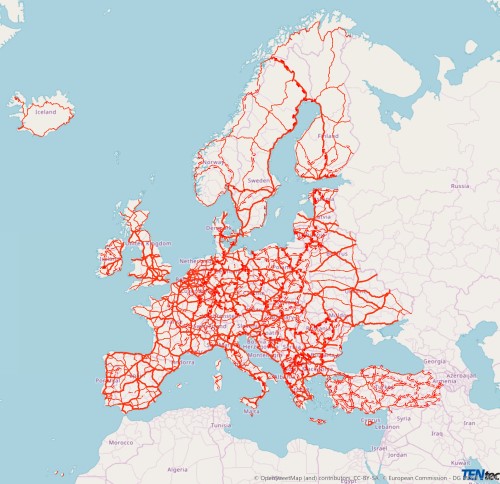
https://mapofeurope.com/road-map-of-europe/
The work of the Strategic Planning, Studies and Development Department is based on the following documents:
 - Southeast Europe 2020 - European Transport Policy until 2010 - European Transport Policy 2010 - 2020 - 2050 - ANNEX I-WHITE PAPER European Transport Policy for 2010 : Time to Decide - Strategy for the Development of Rail, Road, Inland Waterway, Air and Intermodal Transport in the Republic of Serbia, 2008–2015 - Road Safety Strategy 2023-2030, with the Action Plan for 2023-2025 - Road Safety Action Plan for 2023-2025 - Еuropean Green Deal - Sofia Declaration - Sustainable Urban Development Strategy of the Republic of Serbia until 2030 (“Official Gazette of the Republic of Serbia“, No. 47 of 28 June 2019)
DEPARTMENT ACTIVITIES: The Department supports the implementation of projects financed by international financial institutions and European funds. It monitors global trends and new legislative and technical frameworks directly related to the preparation of technical documentation, as well as all current initiatives concerning the harmonisation of technical regulations and standards and the EU accession process. The Department actively monitors developments relating to road administration, potential organisational development, operating principles and administrative procedures; road financing and alternative approaches to road financing; strategic analyses and long-term planning for the preservation and development of the road network. It also participates in the preparation and monitoring of the implementation, from a technical perspective, of the “Putevi Srbije” Annual Business Plan.
In the previous period, the Department for Strategic Planning, Studies and Development actively participated in the project “Institutional Capacity Building in the Transport Sector”. The project was implemented by the Ministry of Construction, Transport and Infrastructure through 18 thematic reports that provided the basis for future transport sector reforms, and was financed by the European Agency for Reconstruction. One of its main outputs was the preparation of the Strategy for the Development of Rail, Road, Inland Waterway, Air and Intermodal Transport in the Republic of Serbia, 2008–2015.
The European Council granted Serbia candidate country status on 1 March 2012, on the basis of the Commission’s opinion on Serbia’s application for membership, adopted on 12 October 2011. On 5 December 2011, the Council concluded that the opening of accession negotiations would be considered by the European Council, in line with established practice, once the European Commission had assessed that Serbia had achieved the necessary degree of compliance with the membership criteria. Given that the Republic of Serbia currently has the status of a candidate country for full EU membership, Serbia’s transport policy is aimed at fostering economic and social development and aligning the country’s transport policy with that of the European Union. As part of the European integration process, considerable efforts have been made in recent years to harmonise national transport legislation with EU legislation. The Department for Strategic Planning has actively participated in the preparation and implementation of Reports produced by the competent ministries as part of this complex process.
The Department for Strategic Planning, Studies and Development actively participated in the implementation of the Memorandum of Understanding, envisaged under the Action Plan for the Implementation of the Priorities of the European Partnership (adopted by the Government of the Republic of Serbia at the end of 2004). The Memorandum of Understanding provided for the establishment of the South-East Europe Transport Observatory (SEETO), with which permanent cooperation was established. Following the recognition of the need for adequate analysis of the data collected to date, which varied considerably among the participating countries in the region as well as between different modes of transport, work was undertaken in the period 2013–2017 on the preparation of the Updated Regional Balkans Infrastructure Study (REBIS), with a view to possible future accession to/signing of the Transport Community Treaty with the EU and negotiations on integration into the TEN-T network. “Putevi Srbije” actively participates in the working group supporting this important project. The Study provides further investment guidelines, confirms the not yet relevant remaining investment decisions, and involves multimodal transport planning with a view to ensuring connections with seaports, inland waterway ports and airports, as well as connections beyond the immediate Western Balkans region based on trade flows. It focuses on non-physical barriers and border crossings, as well as on the main routes of the SEETO Comprehensive Network, taking into account activities carried out within the framework of the Central European Free Trade Agreement (CEFTA).
The Department actively participated in the implementation of a three-year Twinning Agreement with the Swedish Road Administration. The arrangement included consultancy services and training related to the implementation of routine road maintenance works (support for the World Bank loan, which also included the promotion of a modern approach to contracting works based on service quality levels), road safety improvements, a systemic approach to environmental protection within road corridors, and improvements in road network planning and management. The Department also initiated and actively participates in the inter-sectoral project – National Spatial Data Infrastructure (NSDI) in the Republic of Serbia – Road Network.
Within the Western Balkans Trade and Transport Facilitation Project (WBTTF), the Ministry of Construction, Transport and Infrastructure is implementing the component Preparation of the National Transport Strategy of the Republic of Serbia for 2027–2034. The Draft Cycling Development Strategy of the Republic of Serbia for 2022–2026 will be taken into consideration when defining the new comprehensive transport strategy. The objective of the new strategy is to guide the sustainable development of the transport sector as a whole.
Through its activities, the Department is focused on achieving the objectives set out in the Sustainable and Smart Mobility Strategy for the Western Balkans, while also providing expert support to the competent ministry in fulfilling the obligations undertaken by the Republic of Serbia as a member of the Transport Community. The European Union’s White Paper on Transport – Roadmap to a Single European Transport Area: Towards a Competitive and Resource-Efficient Transport System (2050) provided a framework for preparing the European transport area for the future, with a vision of a more competitive and sustainable transport system. The document envisages an increase in transport volumes and support for mobility while taking into account the target of reducing emissions by 60%, to be achieved, among other measures, through a rapid transition to electric and hybrid vehicles.
Through the „Danube Cycle Plans” financed by EU funds (under the Interreg Programme), the Danube Competence Center (DCC), with the support of the former Ministry of Trade, Tourism and Telecommunications and other stakeholders, prepared the first Draft Cycling Development Strategy of the Republic of Serbia from 2022 to 2026. The draft national strategy promotes healthy, green and sustainable mobility: cycling as an activity that contributes to improving the environment and the health of all citizens of Serbia. The Strategy introduces the concept of cycling (sports, tourism, recreational cycling and everyday use of bicycles for mobility) and forms an integral part of the Danube Cycling Strategy, which is also finished.
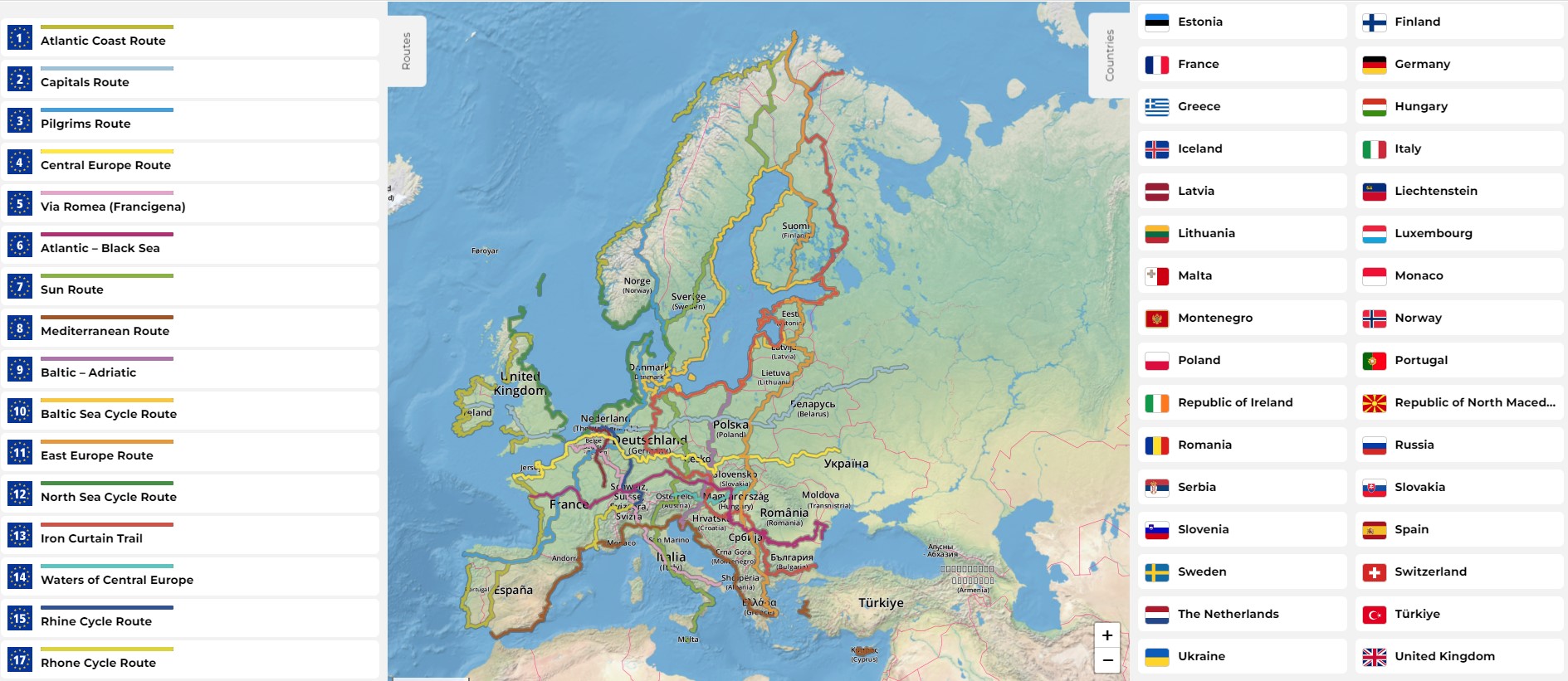
Recognising the need for an adequate and uniform approach to the further planning and development of cycling infrastructure, “Putevi Srbije” has prepared new Guidelines for the Preparation of Planning and Technical Documentation for Cycling Infrastructure in the Republic of Serbia, Work is currently underway on a proposal for regulations governing cycling infrastructure – a manual for the preparation of planning and technical documentation for cycling infrastructure in the Republic of Serbia.
In 2019, an 8.21 km two-way cycle path was constructed under the INTERREG IPA Romania–Serbia Cross-Border Cooperation Programme, as part of the Improvement of Banat Connectivity (IBC) project, on the Kikinda–Nakovo/Romanian border route. The construction of an 11.7 km cycle path from Nova Crnja to Srpska Crnja/Romanian border is also planned to be financed from EU funds and implemented under the EcoTourism Connecting and Developing Region – TORNADO project. Furthermore, as part of the Surčin–New Belgrade urban arterial road construction project, “Putevi Srbije” also planned the construction of a 6.344 km two-way cycle path, thereby contributing to the improvement and better connectivity of Belgrade’s cycling infrastructure. Activities are continuing on the preparation of planning and technical documentation for cycling infrastructure along state roads throughout the Republic of Serbia, and the documentation for the construction of a cycle path along the IIA Category State Road No.100, Belgrade–Novi Sad, is expected to be completed soon.
The revised TEN-T Regulation (EU) 2024/1679 introduces more stringent requirements for the road network as part of the broader objective of ensuring a safe, sustainable and interconnected transport system. Compared with the previous framework, the Regulation places greater emphasis on the quality of road infrastructure, harmonised levels of service across Member States, and the elimination of bottlenecks affecting cross-border traffic. It aligns road infrastructure with EU policy priorities, such as the European Green Deal, the digitalisation of transport services and enhanced road safety standards. In particular, these include indicators relating to the availability and spacing of safe and secure parking areas, the deployment of weigh-in-motion systems to prevent overloading and protect infrastructure, and the provision of a minimum set of universal traffic information to improve road safety and traffic management. Together with indicators concerning the deployment of alternative fuels infrastructure, road safety management practices and the interoperability of tolling systems, these provide a structured means of monitoring compliance with the Regulation. Their purpose is not only to assess whether minimum standards have been met, but also to support continuous improvement by identifying trends, guiding investment and ensuring that road infrastructure throughout the TEN-T network effectively contributes to safer, cleaner and more efficient mobility.
The Department participated in the implementation of the DANUBRIDGE CONNECT project, carried out from 1 September 2024 to 31 August 2025 under the Interreg Danube Region Programme. The project aimed to improve the maintenance and inspection of cross-border bridges through the application of innovative technologies. The project tested the use of georeferenced 3D photogrammetry to create detailed 3D models of bridges and viaducts, with the aim of improving the efficiency, safety and quality of periodic infrastructure inspections. The project results represent a significant step towards introducing innovative methods into routine and periodic bridge inspections, with the aim of enhancing the safety, efficiency and sustainability of transport infrastructure in the Republic of Serbia and across the wider Danube Region.
- Cost-Benefit Analysis Manual - Economic Appraisal Vademecum 2021-2027 General Principles and Sector Applications - CBA Guide 2014-2020 - HEATCO- Developing Harmonized European Approach for Transport Costing and Project Assessment - Guide to Cost-Benefit Analysis of Investment Projects - Structural Fund, Cohesion Fund and Instrument for Pre-Accession-European Commission-Directorate General for Regional Policy - Nаtional Spatial Data Infrastructure (NSDI) in the Republic of Serbia – Road Network - Strategy for the Establishment of Spatial Data Infrastructure in the Republic of Serbia for the Period 2010-2012 - Lаw on the Ratification of the Kyoto Protocol to the United Nations Framework Convention on Climate Change - Lаw on the Ratification of the Paris Agreement – 29 May 2017 - Lаw on the Ratification of the Doha Amendment to the Kyoto Protocol to the United Nations Framework Convention on Climate Change – 21 May 2017